Showing posts with label BRKA. Show all posts

Wednesday, December 2, 2009

Markel Corps Private Acquisitions


Markel Corp. (MKL)
which is a property and casualty insurance company that specializes in specialty insurance products such as wind and earthquake exposed commercial properties, high valued motorcycles, personal, watercrafts, even horse related risks is becoming more and more like Berkshire Hathaway(BRKA, BRKB) as time passes on. Yesterday Markel announced that it acquired Baltimore-based Ellicott Dredge Enterprises LLC which is a 124-year old maker of Dredges. Markel first stepped into the private equity arena almost 5 years ago buying a major stake in a bakery manufacturer. This is a practice that Warrren Buffett has been doing for over 40 years and is quite successful at it. By buying into private concerns Markel is able to get 80-100% of these smaller companies unlike their passive investments in larger holdings such as General Elecrtic(GE), Wal-Mart (WMT), and Carmax (KMX) . By buying majority stakes of these smaller companies Gayner is counting on double digit returns. As you see by the list below these are simple businesses to understand. It seems Tom Gayner who runs the investment arm of Markel adheres to the same practices as Buffett, which is buying businesses that are simple and that have good management already intact. You will notice that their are no high-tech, fashionable companies in this group.

Private acquisitions since 2005

  • Acquires majority stake in AMF Bakery Systems- Located in Richmond Virginia is the world's leading manufacturer of quality bakery equipment for high volume bakeries since 1915.
  • Acquires Parkland Ventures- which owns and operates mobile home parks around the country.
  • Acquires 40 percent stake in First Market Bank- First Market Bank was founded and is headquartered in Richmond and mostly owned by the Ukrop family who own a chain of super markets in central Virginia. Now celebrating its twelfth anniversary, the bank has grown to more than 300 employees and has a network of 39 full-service locations (including 25 in Ukrop's stores and 14 freestanding branches). It has more than $1 billion in deposits and offers a full range of retail and commercial products including mortgage, trust and investment services. Earlier in the year First Market announced a merger with Union Bankshares Corporation. When the merger is complete the combined organization will have 97 branch locations throughout Virginia with more than $4.0 billion in assets.
  • Acquires Panel Specialist- is a leading manufacturer of panels, partitions, wall systems, casework, furniture, and countertops. Their customers include project managers, architects, and builders within five specialized divisions with annual revenues are over 30 million dollars.
  • Acquires an unspecified majority interest in Baltimore- based Ellicott Dredge Enterprises LLC- located in Baltimore Maryland has designed and manufactured over 1500 dredges, more than any other manufacturer, and has served customers in over 8- countries. They market their products through two divisions. The Ellicott Division sells pre-engineered standard dredges primarily to the marine contracting and sand and gravel markets. Ellicott Dredge is the only dredge builder which designs and builds all key components of the dredging system- from winches to pumps, from excavators to spud carriages. This concept of single responsibility lies behind Ellicott's reputation for reliable and durable dredges. Because of this approach, many Ellicott dredges are still going strong after 50 years of steady service. Ellicott also built all of the dredges used in the original construction of the Panama Canal.

Markel has over a one hundred and ten publicly traded companies totaling 1.3 billion dollars in its investment portfolio.


*Author currently long BRKB, MKL

Friday, May 1, 2009

Buffettfest The Woodstock Of Capitalism


Well it is that time of year again. The Woodstock of Finance or Buffettfest which is Berkshire Hathaway's $BRKA annual meeting. Unlike most shareholder annual meetings that seem to be rather boring Berkshire Hathaway's annual meeting is anything but. Over the years it has grown exponentially. Its like going to see your favorite rock band in concert but even better. The Rolling Stones Mick Jagger and Keith Richards don't have anything over Berkshire's Warren Buffett and Charlie Munger. In years past Buffett has strummed a few licks on his ukulele while up up on stage. He has even been seen on a $HOG- that's A Harley-Davidson in case your wondering.

This is basically a weekend long event where a legion of Berkshire loyalist(shareholders) make the annual trek to their Guru's headquarters and home town Omaha Nebraska. From what I am hearing through other news sources is that this year might be a bit somber instead of the usual financial lovefest that its been in years past. You see Berkshire shareholders are not use to loosing money and 2008 was one they would like to put behind them as would most investors.

What makes this so unique is that Buffet is unlike other CEO's of company's. For one he pays himself a low salary in comparison to most CEO's, and his interests have always been aligned with the shareholders of the company. Unlike many annual meetings where the board will make up excuses for short falls or spend half the time talking about electing board members, dolling out stock options or pay raises Buffett shoots straight from the hip. So for the better part of a day Buffett will field question after question. Also unlike other shareholder meetings Buffett and his finance-flower children will have a chance to have some fun and spend money like their on vacation.

The Buffettfest expects a record crowd of 35,000 people this year up from 32,000 last year. While Buffett is coming off his worst year ever, his popularity has rose to new heights. This might be because of the tough times we are in and who better to smooth things over than the Greatest Investor of all time The Guru of Value Investing Warren Buffett.


Below are a few good reads, so enjoy!

Saturday, March 21, 2009

Plenty Of Stocks To Fit Warren Buffett's Criteria!!!

With over $25 billion in cash to deploy it looks as if the worlds greatest investor Warren Buffet could put some of that to work according to a recent Bloomberg article. Buffett looks for companies who have high returns on equity(ROE), low debt/equity ratio, competent management and stable cash flow. This is only the second time since 1965 that the book value of Berkshire Hathaway $BRKA has wound up in the negative column. Even after one of the worst years in recent history, Buffett's Berkshire Hathaway has still managed to compound its book value at over 20% per year annually during the course of the last 44 years. Three stocks high lighted in the article are Sysco $SYY, VF Corp. $VF, and Danaher $DHR. However there are over 50 stocks mentioned here which gives the value investor a good starting point to further research and possibly invest in some of the same stocks as Buffett himself.

Sunday, March 1, 2009

How Might A Small-Cap Warren Buffet Act?


Warren Buffett got an early start in the investment world having a paper route business. With this business he was able to save $2000. He took $1200 of his small fortune and bought a 40 acre farm in which he hired a tenant farmer to run it. Later he and a buddy bought several pinball machines and set them up throughout town. Another early business venture was buying a old limo and renting it out which provided another stream of income. Buffett's first stock purchase came at the age of 11 years old when he bought 6 shares of Cities services preferred stock for $38.25 per share, in which 3 shares were for him and 3 for his sister. The stock initially traded down to $27 per share, when it recovered to $40 per share the young Buffett sold only to watch it soar to $202 per share.

Today many people follow The Oracle of Omaha... professional value investors, stock holders of Berkshire Hathaway, the media such as Fox Business News, Bloomberg, CNBC even has a Buffett Watch, and on many of these financial blogs. While most of these sources do a very good job at tracking Buffett's every move, announcing all the buys and sells that his Berkshire Holding company makes, many do not cover what Buffett might be buying if he had much less capital. This is a subject that should entice any investor especially the small investor. The stocks that Buffet buys now a days for Berkshire are very large companies often in the billions of dollars. Why does he concentrate on the large companies? Well the underlying reason is that Berkshire is so large even after the stock indices major sell off that buying smaller companies is not enough to move the needle. It takes larger companies to move Berkshires performance.

With in the last few years many aspiring Buffeteer's have asked the question: What would Buffett be buying if he had a much smaller equity base to work with. Well he does not give out stock tips but he has given out small hints over the years. We also can do a little detective work to find out what he would be buying with a smaller equity base than what he manages today. In order to do this we must look back in time. Back when Buffett was working for Ben Graham at The Graham Newman Partnership. This was circa 1954-56 and Graham who had managed money through The Great Depression was using a little different technique to investing than what Buffett uses today. Graham was Buffett's teacher, mentor and employer. Back in this era and through the 1960's Buffett used the techniques of Graham, which were controlled investing, arbitrage, and cigar-butt aka NCAV style investing.

There are investors today that apply the early style and methods that Buffett and Graham used . One money manager is Mohnish Pabrai who has gotten much media attention and has even written a book titled The Dhandho Investor. A lessor known, but a up and comer is Sardar Biglari who manages the Lion Fund and whose holdings include the Western Sizzlin $WEST and Steak n' Shake $SNS in which Biglari & Co. is practicing the art of "Controlled Investing". Eddie Lampert is another example that is practicing some of Buffett's earlier investing strategies. For example, Lampert has huge stakes in Sears $SHLD and AutoZone $AZO making up a huge percentage of his portfolio.

So what would Warren Buffett buy today with a smaller equity base, say a few hundred thousand to a few million. Well the investors universe certainly gets much larger. I suspect he would be buying into some of these net net working capital also known as special situations. I also think he would be buying into companies that have had a track record of 10 plus years trading near or below book value with cash on hand and management having a significant stake.
Below are some excerpts taken from the 1962 Buffett Partnership letter:

I have consistently told partners that it is my expectation and hope (it's always hard to tell which is which) that we will do relatively well compared to the general market in down or static markets, but that we may not look so good in advancing markets. In strongly advancing markets I expect to have real difficulty keeping up with the general market.

Our avenues of investment break down into three categories. These categories have different behavior characteristics, and the way our money is divided among them will have an important effect on our results, relative to the Dow in any given year. The actual percentage division among categories is to so degree planned, but to a great extent, accidental, based upon availability facts.

The first section consists of generally undervalued securities (herein after " generals") where we have nothing to say about corporate policies and no timetable as to when the undervaluation may correct itself. Over the years, this has been our largest category of investment, and more money has been made here than in either of the other categories. We usually have fairly large portions (5% to 10% of our total assets) in each of five or six generals, with smaller positions in another ten or fifteen.

Sometimes these work out very fast; many times they take years. It is difficult at the time of purchase to know any specific reason why they should appreciate in price. However, because of this lack of glamour or anything pending which might create immediate favorable market action, they are available at very cheap prices. A lot of value can be obtained for the price paid. This substantial excess of value creates a comfortable margin of safety in each transaction. This individual margin of safety, coupled with a diversity of commitments creates a most attractive package of safety and appreciation potential. Over the years our timing of purchases has been considerably better than our timing of sales. We do not go into these generals with the idea of getting the last nickel, but are usually quite content selling out at some intermediate level between our purchase price and what we regard as fair value to a private owner.

The generals tend to behave market-wise very much in sympathy with the Dow. Just because something is cheap does not mean it is not going to go down. During abrupt downward movements in the market, this segment may very well go down percentage-wise just as much as the Dow. Over a period of years, I believe the generals will outperform the Dow, and during sharply advancing years like 1961, this is the section of our portfolio that turns in the best results. It is, of course, also the most vulnerable in the declining market.

Our second category consists of "work-outs" (or Arbitrage). These are securities whose financial results depend on corporate action rather than supply and demand factors created by buyers and sellers of securities. (Some current examples have been Constellation Energy $CEG or the Rohm-Haas $ROH/Dow Chemical $DOW deal) In other words, they are securities with a timetable where we can predict within reasonable error limits, when we will ger how much and what might upset the applecart. Corporate events such as mergers, liquidations, reorangizations, spin-offs, eventually lead to work-outs. An important source in recent years had been sell-outs in oil producers to major integrated oil companies.

The category will produce reasonably stable earnings from year to year, to a large extent irrespective of the course of the Dow. Obviously, if we operate throughout a year with a large portion of our portfolio in work-outs, we will look extremely good if it turns out to be a declining year for the Dow or quite bad if it is a strongly advancing year. Over the years, work-outs have produced our second largest category. At any given time, we may be in ten to fifteen of these; some just beginning and others in the late stage of their development believe in using borrowed money to offset a portion of our work-out portfolio since there is a high degree of safety in this category in terms of both every results and intermediate market behavior. Results, excluding the benefits arrived from the use of borrowed money, usually fall in the 10% to 20% range. My self-imposed limit regarding borrowing is 25% of partnership net worth often times we owe no money and when we do borrow it is only as an offset against work-outs.

The final category is "control" situations where we either control the company or take a very large position and attempt to influence policies of the company. (Today we see investors such as Biglari buying into Steak n' Shake and Western Sizzlin or Lampert buying into Sears). Such operations should definitely be measured on the basis of several years or a given year, they may produce nothing as it is usually to our advantage that the stock be stagnant market-wise for a long period while we are acquiring. These situations, too, have relatively little in common with the behavior of the Dow. Sometimes, of course, we buy into a general with the thought in mind that it might develop into a control situation. If the price remains low enough for a long period, this might very well happen. If it moves up before we have a substantial percentage of the company's stock, we sell at higher levels and complete a successful general operation. We are presently acquiring stock in what may turn out to be control situations several years hence.

Their are plenty companies out their today that offer upside potential with little downside risk or should I say a margin of safety. Can these companies decrease further before reversing, absolutely. However, we are in a market completely opposite of 1999. During that time period we kept going higher and higher pushing stocks with no earnings or fledgling operations to extreme prices, where their was NO real value. Today the markets push the stock prices below the intrinsic value of these companies.

Warren Buffet stated a few months ago that he was buying American stocks for his Personal account and moving out of treasuries. I would bet he is implementing methods that he used 45 to 50 years ago, for we are seeing stocks valued like this today!


Relevant Articles:


Wednesday, February 18, 2009

$NYT, Railroads, And Lumberjacks?

Thursday's Links...


Which offers a better value? its stock price or its product: The New York Times news paper


Jim Cramer started as a news reporter, turned Hedge Fund Guy, turnedT.V. personality now working on the railroads?


During the Hard Times of the 1930's, Lumberjacks fared well working in an industry that had a 120% return.

Monday, February 16, 2009

Buffett's Other Companies

We here plenty about Warren Buffett and the large publicly traded companies that are major investments of his holding company Berkshire Hathaway(BRKA,BRKB). However we rarely here anything about the many companies that are partially or wholly owned subsidiaries, which total around fifty in all. They range from a candy maker, boot company, paint manufacturer, to the worlds largest carpet company. In fact Buffett prefers to buy the whole company because it permits him in influencing the most critical part of the business: capital allocation.  Over the last 40 years Buffett has bought entire businesses as well as his huge stakes in $AXP, $WFC, $KO, $JNJ and $PG. One interesting company that Berkshire bought into within the last year and a half is The Marmon Group, which into itself is a holding company that runs 130 business units that operate independently within diverse business sectors.  As Buffet has stated many times before:

 I buy businesses, not stocks, businesses I would be willing to own forever.

I am a better investor because I am a businessman and a better businessman because I am an investor.

Here is a further list of Berkshire Hathaway's subsidiaries 

Thursday, February 12, 2009

Buffetts "Build Your Dream" In China???

Here are some interesting links...

Did Warren
Buffett say he did not  invest in technology?  Well electric cars are certainly technology maybe nothing new but building and selling these vehicles on a wide scale is picking up steam. Berkshire Hathaway's(BRKA,BRKB)  subsidiary MidAmerican Energy Holdings owns a 10% stake in this "Dream"

The Wall Street Journal reported  that U.S. Firms Join Forces to Build Car Batteries

With rising fuel cost companies are looking for other alternatives in the car industry and 
Buffett is seemingly taking the cheaper route by investing in an established company.


Wednesday, February 4, 2009

Can Kraft Feed Buffett's Appetite?


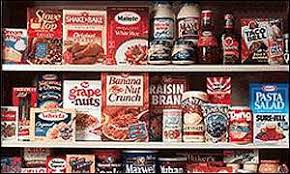
One of Warren Buffett's stocks takes it on the chin this morning by posting a 72% decline in profits and trimming forecast for 2009. Kraft Foods(KFT) is trading down -$2.49 to $26.25 in pre-market this morning 2/4/2009. Kraft is the #2 food maker in the WORLD! Buffett usually makes Few but BIG bets and says his holding time frame is forever. I guess when you get to be the size of Berkshire Hathaway(BRKA,BRKB) you do have to hold a long time. Buffet likes companies with good steady cash flows which Kraft has and seems to be passing this on to shareholders in dividends which have been growing steadily. The current dividend is yielding over 4%. Keep in mind WALL STREET likes to focus on earnings, however the Intelligent Investor should focus on the the underlying business and its cash flows. Organic revenue for the 4 quarter and the year 2008 just ended grew 4.4% and 6.6% respectively. Here's a look at Kraft's(KFT) RECENT REPORT dated February 4th 2009.


Author long KFT

Wednesday, January 21, 2009

Billionaires Buffett & Gates Up Stakes In RailRoad & Waste


Again the Oracle of Omaha, Warren Buffet bought Burlington Northern Santa Fe Corp. (BNI) bringing his total share count to over 74 million and giving him the largest stake with 22% of company . Prices ranged between $61.65-$$63.43.While fellow billionaire buddy Bill Gate's Cascade Investments ups its stake in Republic Services (RSG) bringing the total to over 39 million shares and 10 1/2% ownership. Prices ranged between $22.97-$25.43. Cascade Investments which is gate's Investment arm also has large stake in Canadian National Railway Company (CNI).


Author is currently long BNI

Friday, December 12, 2008

Update! Buffett Again AddsTo Burlington Northern Santa Fe Railway


Once again Buffett is adding to his position in Burlington Northern Santa Fe (BNI), bringing his total stake in the company to nearly 20%. Buffett first announce this position back in the spring of 2007, if you remember he was saying he wanted to do a huge deal, could this be it? Since the market has taken a dive this year he has been on somewhat of a buying binge, with other purchases of Goldman Sachs(GS), General Electric(GE) in which he got preferred shares in both these companies. He has also announce plans to buy all of Constellation Energy(CEG) for $26.50 a share. Below is a direct link to Berkshire Hathaway's most recent buys of Burlington which were on 12/8 & 12/9.

Saturday, December 6, 2008

Warren Buffett Is Adding to His Train Set


At 78 years old Warren Buffet is still playing with CHOO CHOO TRAINS, but their no longer the Lionel Trains from childhood day's. Looks like the Oracle of Omaha is amassing a large position in his favorite railroad company Burlington Northern Santa Fe(BNI). Buffett has been acquiring a position in this company since early 2007 and buying it on dips in the $70-80 range. He has also used the tactic of selling puts on the stock which pays him  similar to getting a dividend. If the stock hits his strike price the stock is put to him . If the stock never hits his strike price he pockets the option premium. Earlier in the year the stock almost hit $115 per share but has fallen back with the over all market. Here is a link to Berkshire Hathaway's(BRKA,BRKB) current filing.

also be sure and check the link to Gurufocus:

Friday, November 28, 2008

Leucadia National In The Shadows Of Berkshire?


 Leucadia National Corp.(LUK) is a publicly traded diversified holding company with investments ranging from telecoms, medical products, real estate, auto finance, investment banking, timber,mining, plastics, gaming entertainment, energy and  even a couple of wineries. Their current track record goes back almost 30 years with their roots being traced back even farther to the mid 1800's. Leucadia which is run by the duo Ian Cumming and Joseph Steinberg does not come up  in the media as much  as  the well known Berkshire Hathaway(BRKA)(BRKB) run by Warren Buffett. However, over the last 30 years these value players have quietly compounded an impressive track record which ranks highly amongst any peer group. Many of their investments are private companies in which they own a significant stake or the whole company. They currently hold positions in 8 publicly traded companies with the largest being the Jefferies Group(JEF).

Currently LUK  trades at $19.50 per share with a book value of $25.00 per share. Their debt/equity ratio is .38, with revenues slightly over 1 billion. Management currently owns 23% of the shares outstanding while large institutions such as, Fairholme(FAIRX), Morgan Stanley(MS) and others own 66%. At the end of September their net worth or stock holders equity came to $5.7 billion dollars. According to their last annual report they had an opportunity to make a large investment in a real estate, farming and ranching business in Argentina which they will give further details at the end of 2008.

Below is Leucadia National's Track Record For The Last 30 Years:

       Book Value    Equity
        Per Share
                                                                     
1978 ($0.04) (a) ($7,657) (a)
1979 0.11  22,945  
1980 0.12  24,917 
1981 0.14  23,997 
1982 0.36  61,178  
1983 0.43 73,498  
1984 0.74  126,097 
1985 0.83  151,033 
1986 1.27  214,587  
1987 1.12  180,408 
1988 1.28  206,912 
1989 1.64  257,735 
1990 1.97  268,567 
1991 2.65 365,495 
1992 3.69  618,161 
1993 5.43  907,856
1994 5.24  881,815 
1995 6.16  1,111,491 
1996 6.17  1,118,107 
1997 9.73  1,863,531 
1998 9.97  1,853,159 
1999 6.59(b) 1,121,988(b) 
2000 7.26 1,204,241 
2001 7.21 1,195,453 
2002 8.58  1,534,525 
2003 10.05  2,134,161 
2004 10.50  2,258,653 
2005 16.95  3,661,914(c)
2006 18.00  3,893,275 
2007 25.03  5,570,492(d)

                         21.7%  compound return on equity


(a) A negative number cannot be compounded; therefore, we have used 1979.
(b) Reflects a reduction resulting from dividend payments in 1999 totaling $811.9 million or $4.53 per share.
(c) Reflects the recognition of $1,135.1 million of the deferred tax asset or $5.26 per share.
(d) Reflects the recognition of $542.7 million of the deferred tax asset or $2.44 per share.
(Dollars in thousands, except per share amounts)


* All information is believed to be reliable but as usual you need to do further research

Friday, November 21, 2008

Omaha Oracle Taps a Medium on Wall Street(circa1999)


Omaha Oracle Taps a Medium on Wall Street

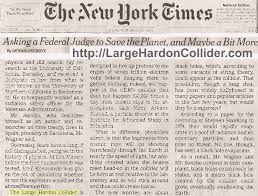
Thought this was an interesting article taken from the NY TIMES January 31st 1999, almost 10 years ago . Look at where Berkshire was trading at then, $65,000 a share, 2 months later it was trading at $73,000 a share. Whats really interesting is that its book value back then was $37,000 a share, which was close to 2x book value. Today it trades at book value which is $77,500 a share. 

anyones thoughts?

Thursday, November 13, 2008

the Dhandho Investor: Mohnish Pabrai


For those of you that are not familiar with Mohnish Pabrai, he is a devout disciple on the teachings by Warren Buffett and Ben Graham. Mohnish runs a fund identical to Warren Buffett's original Buffett Partnership which was the predecessor of Berkshire Hathaway(BRKA,BRKB). Pabrai wrote a book about a year ago titled the Dhandho Investor. The word Dhandho which is pronounced dhun-doe is a Gujarati(a state in India) word. Dhan comes from the Sanskrit root word Dhana meaning wealth. Dhan-dho, literally translated, means "endeavors to create wealth".
Pabrai is a focus investor usually holding about 12-18 stocks in his portfolio. Pabrai likes to put no more than about 10% in each stock. Currently Pabrai holds about 16 stocks in his portfolio with about 320 million under management. Fairfax Financial(FFH), Harvest Natural(HNR), and Sears Holdings(SHLD) represent his 3 top holdings. The current 13F filings show that Pabrai increased his holdings by 52% in Wellcare(WCG) while selling most of his position in Jackson Hewitt(JTX).
For those of you that have not read the Dhandho Investor, you should, it is simple to understand and makes a lot of sense.

Wednesday, October 22, 2008

These 3 Stocks Have A Medicinal Touch

Another hedge for uncertain times is the health care industry. The industry has been beaten down with the rest of the market . Many of these companies are trading at low p/e multiples well below their norm. Three that come to mind are Sanofi-Aventis(SNY), Pfizer(PFE), and Merck(MRK). All three
are trading at p/e's under 13 with debt/equity ratio's under .25 and all sport dividends around 5% or better with Pfizer having a 7.5 % yield. You also have some added support by big name value investors buying in. Warren Buffets Berkshire Hathaway has bought into SNY and Bruce Berkowitzs Fairholme Capital has about 10% of their fund invested. Plus all three have growing free cash flow.

Saturday, October 18, 2008

Buy American, Buffett Says. He Is. - Mergers, Acquisitions, Venture Capital, Hedge Funds -- DealBook - New York Times


Buy American, Buffett Says. He Is. - Mergers, Acquisitions, Venture Capital, Hedge Funds -- DealBook - New York Times

Warren Buffett has stated that investing is much like hitting is in baseball, you step up to the plate and you get 3 strikes before you are out. However the difference is we as investors can wait as long as we want before swinging at the pitch. The pitches are much sweeter than they were 1 year, 2 years and maybe even 25 years ago. Many investors have been stung pretty bad not ever witnessing a market as the one we are in today. But now is when that pitcher is throwing allot of lob balls and is giving us a chance to knock it out of the park. I do not know where the bottom in this market is and when it will end but being an old ballplayer the bat is not sitting idle on these shoulders nor the GREATEST INVESTOR OF ALL TIME WARREN BUFFETT.

check out the link above

STOCKMANMARC