Showing posts with label bengraham. Show all posts

Wednesday, March 24, 2010

A Look Back: Ben Graham Nuggets Trounce The Market


Over the last year and few months I wrote a couple of posts high lighting the famous value investor Ben Graham titled "A Few More Ben Graham Nuggets" and "Ben Graham Nuggets Part 2". Both post high lighted a basket of seven stocks, notice the number... "7"... Lucky number seven (ha ha).

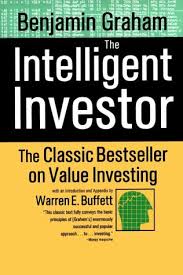
For those not familiar with Ben Graham, here is a quick catch up. Graham is considered the Father of security analysis and value investing as practiced by many value investors today. He wrote two best selling books "Security Analysis" (1934) and "The Intelligent Investor" (1949) that are still in print today. He also ran a money management firm called Graham- Newman and taught at Columbia Business School. Among some of Grahams disciples are Walter Schloss, Irving Kahn and the most famous Warren Buffett.

All the issues mentioned met the following criteria:

  • Current ratio of 1.5 or better
  • A Book Value of 1.5 or less
  • A p/e ratio under 15
  • Positive eps growth over last 5 years
  • Very low or NO debt
  • Pay a dividend

These are not dyed- in- the- wool Ben Graham screening techniques, but rather based on Graham's many years of teaching, writing, and investing. However these 14 stocks mentioned fall under bargain issues. Their are many ways for screening when searching for value stocks, such as earnigs yield used by Joel Greenblatt of Gotham Capital and "The Little Book That Beats The Market". Their is also CROIC (cash return on invested capital) coined by Joe Ponzio over at FWallStreet.

CompanyTicker SymbolClosing price on Oct 30Th 2008 $Closing price on March 24Th
2010 $
Cumulative Return

Abercrombie & Fitch ANF27.0644.38+64.01%

Ashland ASH21.9853.43+143.08%

Bel Fuse BELFB18.7022.04+17.86%

Movado GroupMOV14.2911.79-17.49%

Nam Tai ElectronicsNTE7.284.91-32.55%

Seaboard CorpSEB1098.001389.75+26.57%

Thor IndustriesTHO17.5031.78+81.60%


Total Cumulative Return
Graham Nuggets
+40.19% returnS&P Index
cumulative return Oct 30Th 2008 thru Mar 24Th 2010
954.09-1167.72
+22.40% return


CompanyTicker SymbolClosing price on Dec 10Th 2008 $Closing price on March 24Th 2010 $Cumulative Return

Intersil Corp.ISIL9.3614.74+57.48%

Lufkin IndustriesLUFK35.2679.48+125.41%

bebe storesBEBE6.649.40+41.57%

Heidrick & StrugglesHSII20.6628.21+36.54%

Titanium MetalsTIE8.5416.71+95.67

Williams-SonomaWSM8.5927.72+222.70%

Williams PipelineWMZ14.3530.14+110.03


Total Cumulative Return Graham Nuggets+98.49% returnS&P Index cumulative return Dec 10Th 2008 thru Mar 24Th 2010 899.24- 1167.72 +29.90% return


As you can see by the results that these portfolios based on Ben Graham and Value Investing techniques smashed the market returns. Keep in mind that these techniques may be more favorable during down markets or markets with much volatility.

* returns do not take into the account of any DIVIDENDS paid out
dividends add to total return

Author currently long SEB

Tuesday, September 22, 2009

11 Small Cap Stocks Trading Near Book Value


Benjamin Graham considered the father of security analysis and value investing used a set of tools to pick stocks. These tools much like a carpenter uses to build or fix a house, Graham used to find undervalued stocks. His tools were low P/E ratios, stocks that traded near book value, stocks that made money over the past 5 years, and stocks that showed consistency of paying a dividend. Here is a list of 11 small cap companies trading near their book value. Most of these companies have several characteristics that a Value Investor such as Graham would be looking for. All trade at a low P/E ratio with earnings growth over the last five years. All but one pay a dividend. Six of these issues have paid out a dividend for 10 straight years.
.

American Physicians Capital- founded in 1975 through its subsidiaries, is a regional provider of medical professional liability insurance focused primarily in the Midwest, with Michigan, Illinois, Ohio, Kentucky, and New Mexico as our core states. Based on direct written premiums as reported by A.M. Best Company, we are among the top writers of professional liability in Michigan, New Mexico and Illinois. We rank 19th nationally among professional liability insurers, with approximately 9,300 policies in-force.


Apogee Enterprises- founded in 1949 and is based in Minneapolis, Minnesota transforms plain glass to create distinctive solutions for architects, building owners, contractors, picture framers and others. Our glass and aluminum window, storefront and curtainwall systems make commercial buildings look great, reduce energy consumption and protect against hurricanes and blasts. Apogee's glass also reduces fading and reflection for picture framing customers.


Chase Corporation- founded in 1946 and is headquartered in Bridgewater, Massachusetts engages in the manufacture of specialty tapes, laminates, sealants, and coatings, as well as in the provision of contract assembly services for the electronics industry worldwide.


Espey Mfg. & Electronics Corp.- founded in 1928 and is based in Saratoga Springs, New York engages in the development, design, production, and sale of electronic power supplies, various transformers and iron-core components, and electronic system components primarily in the United States.


Friedman Industries- founded in 1965 and is based in Houston, Texas. Together with its subsidiaries, engages in steel processing, pipe manufacturing and processing, and steel and pipe distribution in the United States.


Oil Dri Corp. of America - founded in 1941 is a leading developer, manufacturer and marketer of products for consumer, industrial and automotive, agricultural, sports fields and fluids purification markets. Oil-Dri -- Creating Value From Sorbent Minerals


Preformed Line Products Company- founded in 1947 and is headquartered in Mayfield Village, Ohio. Together with its subsidiaries, designs and manufactures products and systems employed in the construction and maintenance of overhead and underground networks for the energy, telecommunication, cable operators, and information industries worldwide.


Patterson-UTI Energy- founded in 1978 provides onshore contract drilling services to exploration and production companies in North America. The Company has approximately 350 marketable land-based drilling rigs that operate primarily in oil and natural gas producing regions of Texas, New Mexico, Oklahoma, Arkansas, Louisiana, Mississippi, Alabama, Colorado, Arizona, Utah, Wyoming, Montana, North Dakota, South Dakota, Pennsylvania, West Virginia and western Canada. Patterson-UTI Energy, Inc. is also engaged in the businesses of pressure pumping services and drilling and completion fluid services.


Servotronics- founded in 1959 engages in the design, development, and manufacture of high quality components, systems and sub-systems for use wherever precise control, reliability and cost containment are primary requirements.


The Stephan Co.- founded in 1897 and is headquartered in Fort Lauderdale, Florida together with its subsidiaries, engages in the manufacture, sale, and distribution of hair care and personal care products.


Versar- founded in 1969 and based in Springfield, Virginia provides various professional services to the government and private sector with solutions for infrastructure, facilities management, construction, environmental quality, defense, and homeland security needs in the United States and internationally.


TickerPrice as of
9/18/2009
Book ValuePrice Book RatioFree Cash FlowP/ECurrent RatioMkt CapTotal DebtEarnings Growth Past 5 yrsYield %Industry
ACAP 29.5422.371.37 40.9m8.544.92313.4m25.9m24.31.1Property & Casualty
APOG 15.9411.511.35 31.2m8.941.63444.8m8.4m31.42.2General Building Material
CCF11.67.861.46 12m13.573.0499.1m07.83.1Industrial Equipment & Components
ESP18.113.441.37 4.7m14.2313.338.2m0535.1Diversified Electronics
FRD6.158,2.753.8m4.389.4841.8m54,03016.270.6Steel & Iron
ODC14.3112.931.14 5m11.232.92101.1m21.5m12.714Specialty Chemicals
PLPC 39.5028.191.40 5m13.483.07206.8m7.8m11.42Heavy Construction
PTEN 15.0413.811.11 168.6m12.452.052.3b011.81.3Oil & Gas Drilling & Exploration
SVT7.209.63.782m6.324.9213.9m4.1m38.152Industrial Electrical Equipment
TSC2.425.51.462.1m13.976.6110.3m426,00022.133.3Personal Products
VSR4.043.061.215.0m11.672.7336.8m023.560Technical Services

Tuesday, June 2, 2009

Biglari & Co. Find Value In Those Famous Steakburgers


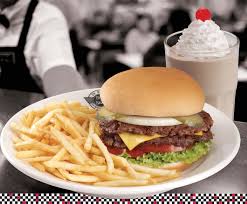
Steak n Shake (SNS) long known for their signature Steakburgers, Crispy Fries and Hand- dipped real- milk Milk Shakes is still offering a value in more ways than one. Since current CEO Sardar Biglari has taken over the helm from the struggling food chain Biglari & Company have acted quickly to instigate a turnaround. While the stock price is well below its 5 year high of nearly $22 per share the business itself represents a company that is being overlooked by the investment community. At the end of 2008 Steak n Shake put in place their 4 meals for under $4 in hopes of driving traffic to their stores. Is this working? Well according to their latest 10-Q they earned .08 cents a share or almost 2.3 million dollars versus a -.14 cent loss from the previous year I would say that their headed in the right direction. However, I do not want to focus on what they earned but the VALUE in the shares of the business.

Like Warren Buffett has often quoted "Price is what you pay and VALUE is what you get."

"We must first cut the knowable, the COSTS, and then invest to increase the unknowable, the sales." Sardar Biglari.

Biglari & Company have whittled down the capital expenditures from 69 million at the end of 2007 to 31.4 million at the end of 2008. Currently the trailing twelve month CapEx is 10.2. The trailing twelve month cash from operations is 36.4 less the current CapEx of 10.2 mil. gives them a Free Cash Flow of 26.2 million. Their current book value is $9.88 per share and the stock is trading around the $8.75 range. At the end of 1999 book value was $4.71 per share while the stock price was $10.13 per share. Most of the property they sit upon is company owned with a value of $413 mil. which equates to $14.35 per share. As of the end of 2008 the company had 415 company owned stores and 75 franchised stores. Recently the stock was ranked in the top 10% in year to date performance of small cap stocks.

While this might not represent a company that is growing at hyper growth rates like many of your social media companies today, this is a company who has been in business since 1934 and has stayed close to their core product line - burgers, fries, and shakes. As you can see by some of the numbers, this stock is trading at a cheaper valuation, than where it was ten years ago. Here is a company who is run by a young man who seems to find undervalued situations much like Ben Graham did through out his career and also like Warren Buffett'S early years when he ran a partnership.

Relevent Articles

The Author suggests further research before investing.
Author is long SNS


Tuesday, March 31, 2009

An Off Shoot Of Buffett's Partnership: The Sequoia Fund

Here is an interesting link on The Sequoia Fund. Sequoia is a value oriented mutual fund managed by Ruane, Cunniff, & Goldfarb. The Seqouia Fund $SEQUX has a large number of companies in their portfolio however Sequoia concentrates a large percentage of its dollars to a hand full of companies. Warren Buffett's Berkshire Hathaway $BRKA, $BRKB currently is their largest holding followed by Martin Marietta Materials $MLM, Fastenal $FAST, IDEXX Labs $IDXX, and Mohawk Industries $MHK. Sequoia has an excellent track record stretching back to 1970. The Sequoia Fund is not really an off shoot of Berkshire Hathaway, however they have a long history together. Bill Ruanne who was the founder of the fund was one of a small group of investors along with Warren Buffett that trace their roots back to the Father of Security Analysis Ben Graham. It seems back in 1969 Buffet ended his Buffett Partnership after a 13 year run. Buffett steered his partners over to Ruane who in turn started the Sequoia Fund. The Fund was closed off to new investors for 26 years and reopened in 2008.


Relevent Article


Wednesday, March 11, 2009

The Many Facets of A Value Investor

What defines a value investor? Many think that value investing is about picking stocks with low PE ratios or stocks trading under book value. While this is certainly true it is only a small part of the equation. It has been 75 years since Benjamin Graham and David Dodd published their book Security Analysis which was in a time of economic uncertainty, much like, what we are experiencing today. I think any Great or even good investor is a value investor. A value investor can come in different make up. For example, Warren Buffett who is considered by many the best investor of all time, chooses his companies differently than say his contemporary Walter Schloss would. Schloss worked and studied under Ben Graham in the 1950's. Both use the same set of principles that were laid out by Graham, but if you study or listen to these men, these valuing techniques may vary. One reason for these varying in techniques, is Berkshire Hathaway's (Buffett's Holding company), shear size. You won't find many of Buffett's companies trading at Graham prices. Nowadays you here Buffett talk about businesses with economic moats. A good example might be Coca Cola $KO or Burlington Northern Railway $BNI. A economic moat is a business that may have a good brand or name recognition, pricing power or trademarks making it more difficult for rivals to compete effectively. Buffett also searches for companies with plenty of free cash flow. Where as Schloss stuck mainly to Grahams original set of principles, looking for cheap stocks trading at or near NCAV. Another investor who has applied these techniques but also added to the screening process is Joel Greenblatt. Greenblatt uses many of Grahams techniques but applied the Earnings Yield. The earnings yield is a inverted PE ratio. Many value investors take large stakes in companies (controlled or focus investing) which gives them an edge. This allows them to have more influence on day-to- day operations. We have witnessed this through Eddie Lampert's investment in Sears Holdings $SHLD or more recently Sardar Biglari's stake in Steak n Shake $SNS.

Some (Value)Investor Terminology

  • low PE ratio
  • dividend yield
  • earnings yield
  • low debt-to-equity ratio
  • free cash flow
  • managements stake
  • earnings growth
  • NCAV or Net-Nets
  • assets/liabilities
  • current ratio
  • economic moats
  • intrinsic value
  • margin of safety
  • book value
  • controlled investing
  • return on equity

Relevant Articles


Sunday, March 1, 2009

How Might A Small-Cap Warren Buffet Act?


Warren Buffett got an early start in the investment world having a paper route business. With this business he was able to save $2000. He took $1200 of his small fortune and bought a 40 acre farm in which he hired a tenant farmer to run it. Later he and a buddy bought several pinball machines and set them up throughout town. Another early business venture was buying a old limo and renting it out which provided another stream of income. Buffett's first stock purchase came at the age of 11 years old when he bought 6 shares of Cities services preferred stock for $38.25 per share, in which 3 shares were for him and 3 for his sister. The stock initially traded down to $27 per share, when it recovered to $40 per share the young Buffett sold only to watch it soar to $202 per share.

Today many people follow The Oracle of Omaha... professional value investors, stock holders of Berkshire Hathaway, the media such as Fox Business News, Bloomberg, CNBC even has a Buffett Watch, and on many of these financial blogs. While most of these sources do a very good job at tracking Buffett's every move, announcing all the buys and sells that his Berkshire Holding company makes, many do not cover what Buffett might be buying if he had much less capital. This is a subject that should entice any investor especially the small investor. The stocks that Buffet buys now a days for Berkshire are very large companies often in the billions of dollars. Why does he concentrate on the large companies? Well the underlying reason is that Berkshire is so large even after the stock indices major sell off that buying smaller companies is not enough to move the needle. It takes larger companies to move Berkshires performance.

With in the last few years many aspiring Buffeteer's have asked the question: What would Buffett be buying if he had a much smaller equity base to work with. Well he does not give out stock tips but he has given out small hints over the years. We also can do a little detective work to find out what he would be buying with a smaller equity base than what he manages today. In order to do this we must look back in time. Back when Buffett was working for Ben Graham at The Graham Newman Partnership. This was circa 1954-56 and Graham who had managed money through The Great Depression was using a little different technique to investing than what Buffett uses today. Graham was Buffett's teacher, mentor and employer. Back in this era and through the 1960's Buffett used the techniques of Graham, which were controlled investing, arbitrage, and cigar-butt aka NCAV style investing.

There are investors today that apply the early style and methods that Buffett and Graham used . One money manager is Mohnish Pabrai who has gotten much media attention and has even written a book titled The Dhandho Investor. A lessor known, but a up and comer is Sardar Biglari who manages the Lion Fund and whose holdings include the Western Sizzlin $WEST and Steak n' Shake $SNS in which Biglari & Co. is practicing the art of "Controlled Investing". Eddie Lampert is another example that is practicing some of Buffett's earlier investing strategies. For example, Lampert has huge stakes in Sears $SHLD and AutoZone $AZO making up a huge percentage of his portfolio.

So what would Warren Buffett buy today with a smaller equity base, say a few hundred thousand to a few million. Well the investors universe certainly gets much larger. I suspect he would be buying into some of these net net working capital also known as special situations. I also think he would be buying into companies that have had a track record of 10 plus years trading near or below book value with cash on hand and management having a significant stake.
Below are some excerpts taken from the 1962 Buffett Partnership letter:

I have consistently told partners that it is my expectation and hope (it's always hard to tell which is which) that we will do relatively well compared to the general market in down or static markets, but that we may not look so good in advancing markets. In strongly advancing markets I expect to have real difficulty keeping up with the general market.

Our avenues of investment break down into three categories. These categories have different behavior characteristics, and the way our money is divided among them will have an important effect on our results, relative to the Dow in any given year. The actual percentage division among categories is to so degree planned, but to a great extent, accidental, based upon availability facts.

The first section consists of generally undervalued securities (herein after " generals") where we have nothing to say about corporate policies and no timetable as to when the undervaluation may correct itself. Over the years, this has been our largest category of investment, and more money has been made here than in either of the other categories. We usually have fairly large portions (5% to 10% of our total assets) in each of five or six generals, with smaller positions in another ten or fifteen.

Sometimes these work out very fast; many times they take years. It is difficult at the time of purchase to know any specific reason why they should appreciate in price. However, because of this lack of glamour or anything pending which might create immediate favorable market action, they are available at very cheap prices. A lot of value can be obtained for the price paid. This substantial excess of value creates a comfortable margin of safety in each transaction. This individual margin of safety, coupled with a diversity of commitments creates a most attractive package of safety and appreciation potential. Over the years our timing of purchases has been considerably better than our timing of sales. We do not go into these generals with the idea of getting the last nickel, but are usually quite content selling out at some intermediate level between our purchase price and what we regard as fair value to a private owner.

The generals tend to behave market-wise very much in sympathy with the Dow. Just because something is cheap does not mean it is not going to go down. During abrupt downward movements in the market, this segment may very well go down percentage-wise just as much as the Dow. Over a period of years, I believe the generals will outperform the Dow, and during sharply advancing years like 1961, this is the section of our portfolio that turns in the best results. It is, of course, also the most vulnerable in the declining market.

Our second category consists of "work-outs" (or Arbitrage). These are securities whose financial results depend on corporate action rather than supply and demand factors created by buyers and sellers of securities. (Some current examples have been Constellation Energy $CEG or the Rohm-Haas $ROH/Dow Chemical $DOW deal) In other words, they are securities with a timetable where we can predict within reasonable error limits, when we will ger how much and what might upset the applecart. Corporate events such as mergers, liquidations, reorangizations, spin-offs, eventually lead to work-outs. An important source in recent years had been sell-outs in oil producers to major integrated oil companies.

The category will produce reasonably stable earnings from year to year, to a large extent irrespective of the course of the Dow. Obviously, if we operate throughout a year with a large portion of our portfolio in work-outs, we will look extremely good if it turns out to be a declining year for the Dow or quite bad if it is a strongly advancing year. Over the years, work-outs have produced our second largest category. At any given time, we may be in ten to fifteen of these; some just beginning and others in the late stage of their development believe in using borrowed money to offset a portion of our work-out portfolio since there is a high degree of safety in this category in terms of both every results and intermediate market behavior. Results, excluding the benefits arrived from the use of borrowed money, usually fall in the 10% to 20% range. My self-imposed limit regarding borrowing is 25% of partnership net worth often times we owe no money and when we do borrow it is only as an offset against work-outs.

The final category is "control" situations where we either control the company or take a very large position and attempt to influence policies of the company. (Today we see investors such as Biglari buying into Steak n' Shake and Western Sizzlin or Lampert buying into Sears). Such operations should definitely be measured on the basis of several years or a given year, they may produce nothing as it is usually to our advantage that the stock be stagnant market-wise for a long period while we are acquiring. These situations, too, have relatively little in common with the behavior of the Dow. Sometimes, of course, we buy into a general with the thought in mind that it might develop into a control situation. If the price remains low enough for a long period, this might very well happen. If it moves up before we have a substantial percentage of the company's stock, we sell at higher levels and complete a successful general operation. We are presently acquiring stock in what may turn out to be control situations several years hence.

Their are plenty companies out their today that offer upside potential with little downside risk or should I say a margin of safety. Can these companies decrease further before reversing, absolutely. However, we are in a market completely opposite of 1999. During that time period we kept going higher and higher pushing stocks with no earnings or fledgling operations to extreme prices, where their was NO real value. Today the markets push the stock prices below the intrinsic value of these companies.

Warren Buffet stated a few months ago that he was buying American stocks for his Personal account and moving out of treasuries. I would bet he is implementing methods that he used 45 to 50 years ago, for we are seeing stocks valued like this today!


Relevant Articles:


Tuesday, January 27, 2009

Ben Graham & The Almighty Dividend

Ben Graham quotes in his book The Intelligent Investor that...  

One of the most persuasive tests of high quality is an uninterrupted record of dividend payments going back over many years. We think that a record of continuous dividend payments for the last 20 years or more is an important plus factor in the company's quality rating. Indeed the defensive investor might be justified in limiting his purchases to those meeting this test.

Certainly with all the major indices in the tank, dividend yields should be greater. This is true but keep in mind that just because a stock pays a dividend does not mean it is a good buy or good investment. However paying a dividend is just another tool and perhaps a very good tool in finding a suitable stock investment.

Where should one start, well their are many financial sites on the web that have this information. A couple  of the easy places to start are Google Finance(GOOG) and Yahoo Finance (YHOO), both have excellent sites for quick and  easy reference. 

Also over at the DividendGrowthInvestor who covers the  subject  of dividend investing, offers a wealth of information.

Graham used the dividend as just one of several criteria for picking stocks.  Why was this? To show that a company was sharing some of the earnings with the stock holders. So often company's will reinvest the earnings back  into the business. In some cases this makes sense, but quite often not.

.....We have  always heard that  "Cash Is King"..... So give me that Dividend Payment Please.

Wednesday, January 7, 2009

Graham + Greenblatt = The GG Formula

Here are a few stocks that meet some of the characteristics that Ben Graham and Joel Greenblatt might consider, I call it the GG Formula. What is the GG Formula, simply put it is taking both stock picking methods and merging the two. While Graham used book value in his equation the GG Formula does not. I took a different approach by emphasizing Greenblatts Return On Capital(ROC) or Return On Assets(ROA). This may seem odd but I wanted to see how this experiment turned out. I think whether one is using Grahams method or Greenblatts you can still pick winners. One thing that they both emphasize is to buy a basket or handful of stocks, which I think is extremely important for the passive investor. Listed below are a few stocks from different industries that made the GG cut.


mkt/cap p/e roa roe debt earn.yeild

Airvana (AIRV) $390m 4.2 38% 69% 0% 23%

Dawson (DWSN) $156m 4.6 16% 21% 0% 23%
Geophysical

Garmin (GRMN) $4.5b 5.5 28% 38% 0% 18.5%

Nutrisystem $477m 8.4 33% 47% 0% 12%
(NTRI)

Forest Labs $7.9b 8 21% 26% 0% 12%
(FRX)


*What is also interesting is that many of these scanning techniques will sometime overlap
*Author is currently long $NTRI.

Wednesday, December 10, 2008

Ben Graham Nuggets Part 2


Remove Formatting from selection
The Market Crash of 2008 has created many opportunities for the investor especially the most prudent of investors- the Value Investor. While many stocks look like bargains not all are. Many are value traps however many might be diamonds in the rough. One of Ben Grahams strategies while managing money during his 30 years of running "Graham-Newman Partnership" was to buy a basket of beaten down stocks . While there are many stocks currently that fit in the mold or come close to Grahams strategy here is the latest list:

All issues mentioned have a current ratio better than 1.5, a book value under 1.5, a p/e ratio under 15, positive eps growth over last 5 years, very low or no debt, and pay a dividend of at least 2 percent or better.


7 Ben Graham Nuggets

Williams Pipeline LP(WMZ)- Williams Pipeline Partners L.P. owns and operates natural gas transportation and storage assets in the United States.

Lufkin Industries(LUFK)- Lufkin Industries, Inc. and its subsidiaries engage in the manufacture and sale of oil field pumping units, power transmission products, and highway trailers.
Bebe Stores(BEBE)- bebe stores, inc. engages in the design, development, and production of womens apparel and accessories. Management holds a large stake in this one.

Heidrick &Struggles(HSII)- Heidrick & Struggles International, Inc. provides executive search and leadership consulting services in the Americas, Europe, and the Asia Pacific.

Titanium Metals(TIE)- Titanium Metals Corporation produces titanium melted and mill products.

Williams-Sonoma(WSM)- Williams-Sonoma, Inc. operates as a specialty retailer of home products.

Intersil Corporation(ISIL)- Intersil Corporation is a global technology leader specializing in the design and manufacture of high performance analog semiconductors.

More Ben Graham Nuggets here:

*These are not recommendations but ideas for further study before investing.

Monday, November 3, 2008

Buffett...Berkowitz...Lampert...Pabrai... And Focus Investing

What is Focus Investing? Does it mean staring at your stocks so long that you become cross eyed. No! Focus Investing is a style that has been around for many many years but it is not talked about much in the mainstream, only in value circles do you hear it mentioned. Its concentrating your bets, putting a large amount of your investment dollars or portfolio into your best ideas. Investors Mohnish Pabrai, Bruce Berkowitz, Eddie Lampert, and Warren Buffett have practiced this style, along with many other notable investors. The first three mentioned, Pabrai, Berkowitz, and Lampert practice this method very much today. For example, Eddie Lampert has 50% of his ESL Investments in Sears Holdings(SHLD) and another 20% in Autozone(AZO). Buffet however over the years has become more diversified owning roughly 90 public and private companies, not necessarily by choice but by the growth and success he's had. Both Pabrai (The Dhando Investor) and Joel Greenblatt (You Can Be A Stock Market Genius) mention focus investing in their books. Focus Investing also has to do with position sizing and what percentage you should allocate to each security, 5% 15% 25% or greater. This all depends on ones risk tolerance, and your expectations for upside(downside) potential. Pabrai has stated that ideally he favors putting no more than 10% of his total holdings in one individual security and only buying about 10-15 stocks. Here again this has to do with ones own personal risk level.
If you study many of the master stock pickers over the last 60 years you will see that they have used or use Focus Investing out performing the indexes.

Your comments or thoughts...

Thursday, October 30, 2008

A Few More Ben Graham Nuggets


  • These stocks come very close to meeting Ben Grahams criteria:

    All issues mentioned have a current ratio better than 1.5, a book value under 1.5, a p/e ratio under 15, positive eps growth over last 5 years, very low or no debt, and pay a dividend. 8 out of 10 companies have earned money for last 10 years straight while 2 companies have been positive for at least 8 of those 10.

    Abercrombie (ANF)- A specialty retailer catering towards the younger crowd. This one surprised me to be on this list. Has a high ROE that has averaged over 30+ % for last 10 years.

    Ashland Inc.(ASH)- A well run diversified chemical company trading at a sales ratio of .17 and 43% of book value.

    Bel Fuse(BELFB)- Manufacturers electronic components trading at 2x cash.

    Movado(MOV)- Another retailer that manufacturers and markets fine watches and jewelry.

    Nam Thai Electronics(NTE)- Electronics company that has increased cash flow over last 6 years straight. Value investors the Kahn Brothers (Irving Kahn served as teaching assistant to Ben Graham in the 1930's) have stake in company.

    Seaboard(SEB)- Insiders own 72% as well as the Kahn Brothers.

    Thor Industries(THO)- The largest manufacturer of recreation vehicles and a major builder of small buses. Insiders own 36%.


    These are not recomendations but ideas to further study before investing

    STOCKMANMARC

Wednesday, October 15, 2008

A Jumpstart For Investing

Dear Investor whether you are a beginner or seasoned pro here are some things to look for when you want to go shopping for some stock.

1) First of all don't think of it as stock, think of it as a share in business.

2) Look at a business or industry you understand, for example if you are a shoe salesperson look
at shoe retailers and shoe manufacturers, not at technology companies.

3) Do not go on tips(to-insure-prompt-service), tips are what you give your waiter.

4) Think independently, do your own homework.

5) Never quit learning, how do you think Warren Buffet became one of the richest men in the
world? He sits in his office reading annual reports all day.

Will cover more on this later.

Thursday, October 9, 2008

An Excerpt From The Intelligent Investor


  • A stock is not just a ticker symbol or an electronic blip; it is an ownership interest in an actual business with an underlying value that does not depend on its share price.
  • The market is a pendulum that forever swings between unsustainable optimism (which makes stocks to expensive) and unjustified pessimism (which makes them too cheap). The intelligent investor is a realist who sells to optimists and buys from pessimists.
  • The future value of every investment is a functune of its present price. The higher the price you pay, the lower your return will be.
  • No matter how careful you are, the one risk no investor can ever eliminate is the risk of being wrong. only by insisting on what Graham called the "margin of safty" -never overpaying, no matter how exciting an investment seems to be -can you minimize your odds of error.
  • The secret to your financial success is inside yourself. If you become a critical thinker who takes no Wall Street "fact" on faith, and you invest with patient confidence, you can take steady advantage of even the worst bear markets. By developing your disipline and courage, you can refuse to let other people's mood swings govern your financial destiny. In the end, how your investments behave is much less than how you behave.