Showing posts with label freecashflow. Show all posts

Friday, October 23, 2009

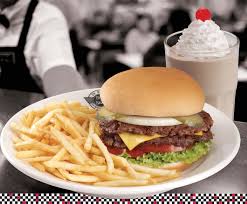
Steak N Shakes Flipping Burgers into $$$


I have written about Sardar Biglari a few times since the start of the year. It appears more on Wall Street are taking notice of this fund manager. This article is from the Wall Street Journals news wire... Steak N Shake 'Already Flowing with Cash'.

Biglari runs a partnership much like the one Warren Buffett ran earlier in his career.

Biglari who started buying Steak N Shake shares a couple years ago is currently the largest shareholder. He is also the acting CEO. He is what you would call a share holder activist. Share holder activists are usually investors who usually take a large stake in a company and push for a turnaround, this is usually when the stock has performed poorly. Not always is this good for the small shareholder but in the case with biglari, his interests are in line with shareholders. As the article states Steak N Shake is already producing free cash flow. Trailing 12 months free cash flow is 35.9 million (see chart below). Biglari has stated before that he could use the cash to buy back shares which decreases the shares outstanding which would help boost the bottom line. He can also take the excess cash and put it to use in better performing businesses, much like buffett has done over the last half century.

Management Direction

"New management, during the fourth quarter of fiscal year 2008, enacted a change in strategic direction under which we began to operate in a manner designed to generate cash. Our long-term objective is to maximize intrinsic business value per share of the Company. (Intrinsic value is computed by taking all future cash flows into and out of the business and then discounting the resultant number at an appropriate interest rate.) Thus, our financial goal is to maximize free cash flow and return on invested capital. We regard capital allocation as immensely important to creating shareholder value. Steak n Shake is transforming into a holding company. Its basic premise is to reinvest cash generated from its operating subsidiaries into any investments with the objective of achieving high risk-adjusted returns. Pursuant to a resolution of the Company’s Board of Directors on June 17, 2009, all investment and other capital allocation decisions are made for the Company by Sardar Biglari, Chairman and Chief Executive Officer. "

Steak N Shake might sell burgers, fries and shakes, however one day they could very well be selling insurance. Biglari is also the largest shareholder of Western Sizzlin (WEST) which he plans on rolling into Steak N Shake which should take place in the coming months.


Free Cash Flow $Mil200620072008TTM
Cash from Operations69.643.424.442.0
Cap Ex(80.8)(68.6)(31.4)(6.1)
Free Cash Flow(11.3)(25.2)(7.0)35.9


Author is currently long SNS

Posted via email from stockmanmarc's posterous

Tuesday, October 13, 2009

Cash Flowing & Growing!

Even though we have seen the markets rise over the last few months
and many investors/traders calling for a market correction somewhere near here.
These four companies have been passing on profits(through dividends)
to shareholders while growing their businesses. These stocks still look cheap by
their EV/EBITDA ratio of under 6 and low P/E multiples under 10.
Earnings and book value have both increased at double digit rates over the last five years. Two of these company's have tripled off their market lows but still look cheap.

CompanySymbolYieldPrice as of 9/7/2009P/EEPS Gwth (5yr Hist)Earnings Yield (EPS/Price Per Sh)Book Value Gwth(5yr Avg)Cash Flow Gwth (Cur vs.Prior TTM
Apogee EnterprisesAPOG2.2%$14.698.660.60%11.9%13.2%28%
Innophos HoldingsIPHS3.4%$19.802.481%43%32.2%39%
Safety InsuranceSAFT4.75%$33.689.518.5%10.6%16.1%20.3%
TidewaterTDW2.2%$45.056.461%15.8%12.6%30.6%


Apogee transforms plain glass to create distinctive solutions for
architects, building owners, contractors, picture framers and others. Our glass and aluminum window,store front and curtainwall
systems make commercial buildings look great, reduce energy consumption and protect against hurricanes and blasts. Apogee's glass also reduces fading and reflection for picture framing customers. We combine the expertise of our people to engineer glass and metal building façades, complete massive orders for skyscrapers on time, and manage complex window, curtainwall and storefront installation projects. We also provide glass that makes framed art and pictures look better, while helping framers improve profitability. Leaders in our markets, Apogee leverages the strengths of our products and people to deliver distinctive solutions.


*Here's what The Fools say A Top-rated building products companies


Innophos is a

leading producer of specialty grade

phosphate products for the Food, Pharmaceutical and Industrial market segments. Within these segments our products cover a broad range of applications including water, paper and metal treatment, agriculture, electronics, textiles, tablets, meat

preservation and detergents. For example, specialty phosphates act as flavor enhancers in beverages, leavening agents in baked goods and cleaning agents in toothpaste. With over a century of experience, Innophos and its predecessor companies have pioneered the processes whereby complex phosphates are derived from organic phosphate rock. Our products are produced to the highest standards of quality and consistency with most of our global production facilities operating to ISO 9002 and GMP accreditation. We also hold a number of key patents governing the manufacture and use of phosphates and continue to develop new and innovative phosphate based products to address specific customer applications.


*A Magic Formula Stock with a 5 Star Rating From The Fool


Safety Insurance is a leading provider of private passenger automobile insurance in Massachusetts. In addition to private passenger automobile insurance (which represented 71.7% of their direct written premiums in 2008), they offer a portfolio of property and casualty insurance products, including commercial automobile (13.2% of 2008 direct written premium), homeowners (11.6% of 2008 direct written premium), dwelling fire, umbrella and business owner policies. Operating primarily in Massachusetts through their insurance subsidiaries, Safety Insurance Company, Safety Indemnity Insurance Company, and Safety Property and Casualty Insurance Company,
they have established strong relationships with 827 independent insurance
agents in 969 locations throughout Massachusetts.


Tidewater through its subsidiaries, provides offshore supply vessels and marine support services to the offshore energy industry through the operation of fleet of offshore marine service vessels. It offers services to support various phases of offshore exploration, development, and production, including towing of and anchor handling of mobile drilling rigs and equipment; transporting supplies and personnel; and assisting in offshore construction activities.


Author long APOG

Please note that Apogee came up in an earlier screening I did. 11 Small Cap Stocks Trading Near Book Value

Monday, October 5, 2009

Update On Thor Industries

Thor Industries $THO is the world's largest manufacturer of recreation vehicles and a major builder of commercial buses. I first mentioned Thor back in January 2009 when it was trading at $13.50 per share. The stock was used as an example of a company that the seasoned value investor Walter Schloss might pick if he were still picking stocks on a professional basis. Schoss had a very impressive track record during his years managing money. He was also a part of Ben Graham's alumni.

The stock has had an impressive run this year. I believe the stock price has gotten a little ahead of itself. They just announced today that they were making a special one time payout of 50 cents per share on their dividend. This is in addition to their quarterly payout of 7 cents per share. This is probably why the stock price ran up today.

10 months ago this stock traded at around 1X book value, where as now it trades for 2.3 book. Management still holds a big stake in this company at 39%, which is a plus, and aligns them with shareholders. The company still has a nice cash cushion of over 328 million with NO debt and free cash flow. All good looking figures for any value investor on the lookout for a new business to allocate money in. In fact Warren Buffett bought a similar business Forest River back in 2005, it to had NO debt. It would not suprize me if Buffett or another company would come in and buy this company outright. While I still feel that this is a very well managed company and things are looking up, the margin of safety is not where it was 10 months ago.

*Author does not currently have position in $THO


Posted via email from stockmanmarc's posterous

Tuesday, September 29, 2009

Two Under Valued Companies Trading at Their Cash Value

Without getting into the current Healthcare Reform issues. Here are two managed-care companies Humana Inc. and Molina Healthcare that are now selling for what they currently have in cash. Humana has nearly doubled off its march low while Molina is only up about 30 percent. Both have current ratio's above the 1.5 ratio, which is a measure of a company's ability to pay back short- term debt with its short term assets. A ratio of under 1 shows that they might be hard pressed to pay off any monies owed if it were due at that point. Molina is currently trading at 1x book value while Humana has a book value ratio of 1.28. Molina has increased its book value almost 5.5x since 2002
while Humana has increased theirs 3x which is a key measure that Warren Buffett looks for.Both seem to be consistent free cash flow generators another key measure that most value investors look for. Income investors might want to look elsewhere due to the fact that neither company pays a dividend.

CompanySymbolCash/sharePrice as of 9/28/2009Book value/shareCurrent ratio
P/E ratioMarket cap
HumanaHUM$36.57$38.03 $29.821.627.56.3b
Molina HealthcareMOH$21.59$20.97$20.941.889.4537m

*The Molina family along with other insiders hold 51% of the stock. Currently 20% of the float is being shorted.

*Value Investor Bruce Berkowitz of The Fairholme Fund ($FAIRX) owns 9.5 million shares of Humana which represents a top ten holding for the fund.

Tuesday, September 22, 2009

Spot Light On A Small Cap Stock

Vicon Industries $VII Industries is an industry-leading designer, manufacturer and marketer of video systems and components used for security, surveillance, safety and control purposes. Celebrating over 40 years in business, the company is unrivalled in experience developing video surveillance technologies. Vicon systems are employed worldwide in high-profile, enterprise-scale installations by a diverse range of customers, including governments, Fortune 500 companies, private and public institutions, and global transit and commerce hubs.


Vicon currently trades at 4x current free cash flow with a Book Value of 7.6. Currently the stock is trading at $5.85 per share. Management has a 39% stake in the business. It also has a earnings yield of 11.24% which is double the S&P 500’s earnings yield of 5.29%. Recently the company was named to Fortune Magazine’s 2009 Fastest Growing Small Public Companies.


Posted via email from stockmanmarc's posterous

Tuesday, September 15, 2009

10 Small Caps with High "Insider Ownership"

All 10 stocks mentioned below offer double digit rates of return on equity as well as assets. ROE is a corporations measurement of how profitable the company is with the money shareholders have invested. ROA shows how efficient management is at using its assets to generate earnings. All ten are trading at reasonable P/E ratios. All 10 mentioned have current ratios above 1.9, any thing above 1.5 shows that the company is capable at paying back short term debt. All 10 have a large inside ownership with modest to low debt and free cash flow, with each paying a dividend.

CompanySymbolPrice$ as of 9/14/09P/E
Ratio
ROE%ROA%Market CapFree
Cash Flow
Inside
Ownership
%
Current
Ratio
AAON, Inc.AAON20.3112.529%18%349 mil20 mil27%2.1
Advance AmericaAEA5.679.620%11%358 mil168 mil31%5.2
Alliance HoldingsAHGP20.1611.938%11%1.2 bil122 mil79%2.1
Alliance ResourceARLP3511.352%11%1.3 bil71 mil44%2.1
BuckleBKE28.5411.530%23%1.3 bil94 mil44%3.7
BreitBurn Energy BBEP10.95.9265%21%593 mil37 mil42%1.95
Cal-Maine FoodsCALM28.398.526%14%659 mil113 mil39%2.3
Lancaster ColonyLANC50.5615.923%16%1.4 bil64 mil35%2.9
Newmarket
Corp
NEU88.6514.227%12%1.3 bil42 mil23%2.8
Terra NitTNH10610128%63%1.9 bil375 mil75%5

* Deep Value Investor Seth Klarman of The Baupost Group holds 8.49 million shares of BreitBurn Energy which accounts for over 16% of the stock.

Tuesday, June 2, 2009

Biglari & Co. Find Value In Those Famous Steakburgers


Steak n Shake (SNS) long known for their signature Steakburgers, Crispy Fries and Hand- dipped real- milk Milk Shakes is still offering a value in more ways than one. Since current CEO Sardar Biglari has taken over the helm from the struggling food chain Biglari & Company have acted quickly to instigate a turnaround. While the stock price is well below its 5 year high of nearly $22 per share the business itself represents a company that is being overlooked by the investment community. At the end of 2008 Steak n Shake put in place their 4 meals for under $4 in hopes of driving traffic to their stores. Is this working? Well according to their latest 10-Q they earned .08 cents a share or almost 2.3 million dollars versus a -.14 cent loss from the previous year I would say that their headed in the right direction. However, I do not want to focus on what they earned but the VALUE in the shares of the business.

Like Warren Buffett has often quoted "Price is what you pay and VALUE is what you get."

"We must first cut the knowable, the COSTS, and then invest to increase the unknowable, the sales." Sardar Biglari.

Biglari & Company have whittled down the capital expenditures from 69 million at the end of 2007 to 31.4 million at the end of 2008. Currently the trailing twelve month CapEx is 10.2. The trailing twelve month cash from operations is 36.4 less the current CapEx of 10.2 mil. gives them a Free Cash Flow of 26.2 million. Their current book value is $9.88 per share and the stock is trading around the $8.75 range. At the end of 1999 book value was $4.71 per share while the stock price was $10.13 per share. Most of the property they sit upon is company owned with a value of $413 mil. which equates to $14.35 per share. As of the end of 2008 the company had 415 company owned stores and 75 franchised stores. Recently the stock was ranked in the top 10% in year to date performance of small cap stocks.

While this might not represent a company that is growing at hyper growth rates like many of your social media companies today, this is a company who has been in business since 1934 and has stayed close to their core product line - burgers, fries, and shakes. As you can see by some of the numbers, this stock is trading at a cheaper valuation, than where it was ten years ago. Here is a company who is run by a young man who seems to find undervalued situations much like Ben Graham did through out his career and also like Warren Buffett'S early years when he ran a partnership.

Relevent Articles

The Author suggests further research before investing.
Author is long SNS


Tuesday, April 21, 2009

Concentrate On Value Part III - Debt/Equity Ratio

As I wrote in my previous two Post, Ignore the headlines and stick with the facts at hand, not the B.S. that is hyped in the media or the tips you hear at a party. Investing, although not so simple can be enjoyable and profitable if you approach it in the right manor. As mentioned in my previous two posts book value, free cash flow and return on equity are just some of the tools used to finding the right business to invest in. Another tool to help guide you is the debt/equity ratio which is simply liabilities divided by the stock holders equity. A simple example of this would be: Take your homes current market value, say it is $200,000 dollars and lets say you owe the bank $100,000 dollars, your debt-to equity ratio is 1.0 or 100 percent. Lets also take your neighbors home current value of $200,000 dollars and suppose he/she owes $150,000 dollars. The debt/equity ratio is $150,000/$200,000 3.0 or 300 percent. In this formula we are looking for low debt/equity ratio's. The lower the better. However keep in mind that some industry's will have higher figures than others. Also take note that this is how many company's finance their growth,however if the debt/equity ratio gets to be to high this could be a warning sign to get out or stay away altogether. Also let me reemphasize that you should never take just one of these methods all on its own. Choosing a stock using a combination of these methods can yield some profits for the patient investor with an eye for value.

Sunday, April 5, 2009

Ignore The Headlines And Concentrate On Value Part II

As I said in my previous post concentrate on the fundamentals. We as investors are constantly bombarded with news via 24 hour news channels, the news paper and now that Ultra 24 hour news channel The Internet. Hey information is great and now we can receive more of it and at a faster speed than ever. As an astute investor one needs to turn off the hype and noise and concentrate on those fundamentals. I mentioned earlier terms such as book value and free cash flow, well their are other important things to look at when buying into a business. For example One of the most important profitability metrics is return on equity [or ROE for short]. Return on equity reveals how much profit a company earned in comparison to the total amount of shareholder equity found on the balance sheet. If you think back to lesson three, you will remember that shareholder equity is equal to total assets minus total liabilities. It’s what the shareholders “own”. Shareholder equity is a creation of accounting that represents the assets created by the retained earnings of the business and the paid-in capital of the owners.

A business that has a high return on equity is more likely to be one that is capable of generating cash internally. For the most part, the higher a company’s return on equity compared to its industry, the better. This should be obvious to even the less-than-astute investor If you owned a business that had a net worth [shareholder’s equity] of $100 million dollars and it made $5 million in profit, it would be earning 5% on your equity [$5 / $100 = .05, or 5%]. The higher you can get the “return” on your equity, in this case 5%, the better.

Some businesses that cosistantly have high returns on equity are Philip Morris International $PM w/59% ROE, Johnson & Johnson $JNJ w/30% ROE, and Coca Cola $KO w/28% ROE.

Return On Equity is another investment metric used by many famed Value Investors such as Warren Buffett, Bruce Berkowitz, Mohnish Pabrai and many other notabe investors.

Ignore The Headlines And Concentrate On Value

Ignore the headlines and concentrate on the fundamentals. The market has had a nice run the last two weeks bouncing up over 20%. Hey this is great but don't get caught in the hype. Sure you want the market to go up just like most everyone else, however to many people get caught up in the NOW, that is, what the Stock Market is doing today, this week or next month. Forget that crap and concentrate on investing in businesses. As an Independent Investor one needs to focus on the true worth or the actual value of the business. Its the same thing as if you were to buy a pizza parlor. How much does the business make? How long will it take to get my money out of it? How much debt do they have? Is this business located in the right place? Is this a dying business or a growing one? These are some of the things you would ask if you were buying an existing establishment. Well the same rules apply to the stock market, except most individuals and institutions do not adhere to these principals. Of course their is no sure fire way but if you focus on a few basic fundamentals such as book value or free cash flow this will help in whittling down some prospective investments. For those that might be new, book value is defined as the total value of the company's assets that shareholders would theoretically receive if a company were liquidated. Warren Buffett uses the book value as a measuring stick, often looking at the growth in book value. Free Cash Flow represents the cash that a company is able to generate after laying out the money required to maintain or expand its asset base. Currently Wellpoint $WLP is a good example of a business with excellent free cash flow.


Tuesday, October 28, 2008

YAHOO! HAS PRIME REAL ESTATE!!!

That's right Yahoo! (YHOO)has prime real estate, no not sky scrapers or waterfront properties but Internet real estate presence. They rank #1 and #2 respectively for Top Global and U.S. sights. Yahoo's finance page called "finance.yahoo.com" is also the most visited site in investing.
You would think with all their Internet presence they would be trading much higher, but like the market in general they are trading well off their highs. So what is this Internet behemoth worth anyway? Earlier in the year Microsoft(MSFT) made a bid of $33 per share which Mr. Jerry Yang Yahoo's Co-Founder and current CEO turned down. Yahoo is currently trading at $11.50 per share. In 1998 Yahoo's sales were 203 million with a book value of 38 cents per share and 435 million in cash with a stock price of $16.35 per share. Today in 2008 Yahoo does over 7 billion in sales with a book value of $8.33 per share and 3.6 billion in cash with a stock price of $11.50 per share. Book value has increased over 2000% since 1998 while revenues have increased over 35 fold. With its stock trading at 7x cash flow and 10x free cash flow it wouldn't be to surprising to see Microsoft or another suitor to come back into play. Shareholder activist Carl Icahn has a vested interest while management still has 20% itself. Even if no takeover or merger materializes these shares still look under valued. With 3.6 billion in cash Yahoo might do a little hunting itself and acquire some smaller players on the Internet landscape.


STOCKMANMARC

Author currently long MSFT, no positions in YHOO